
Figma New Features May 2026: AI Agent, Make, Buzz & Everything Announced at Config 2026
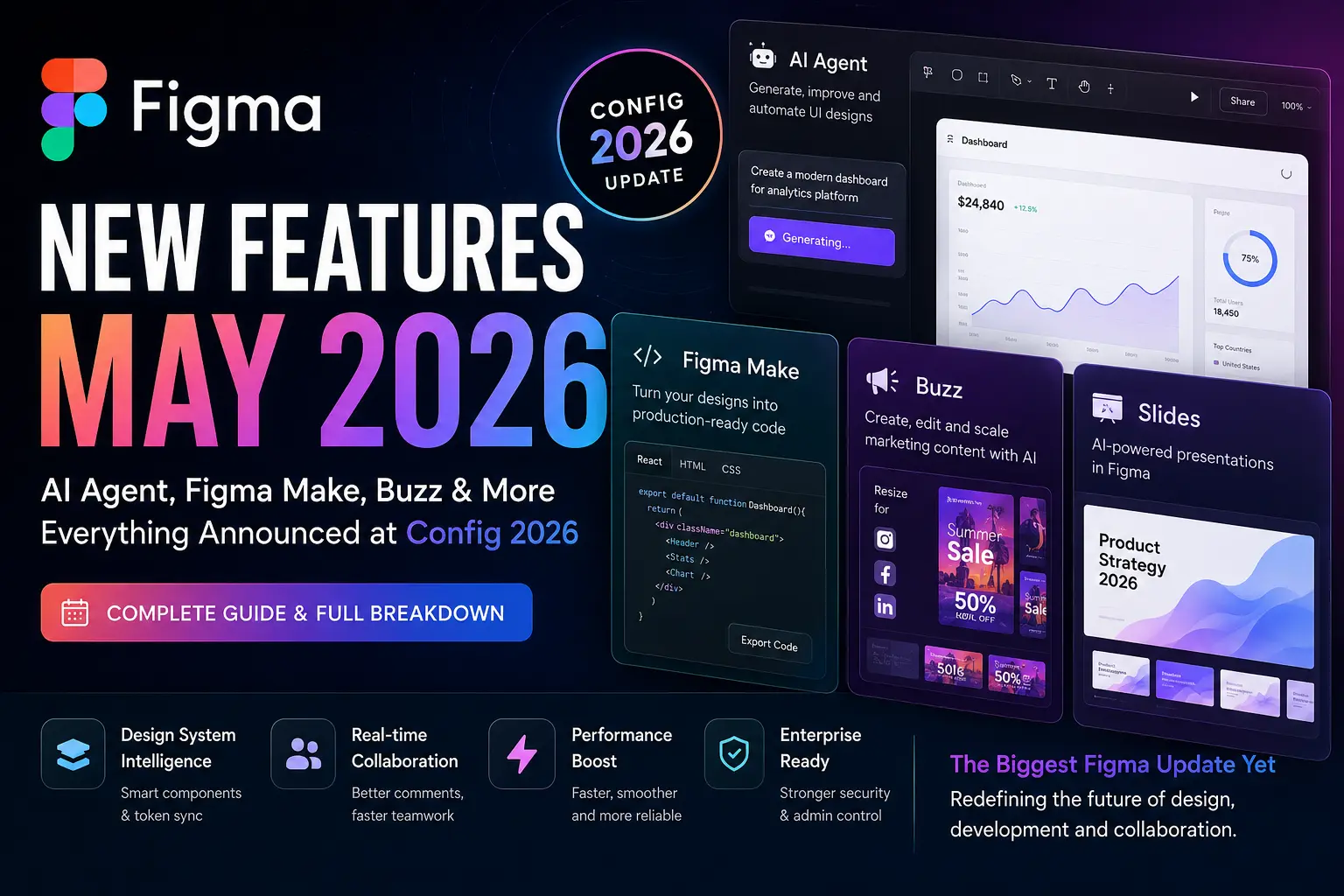
Figma's 2026 Updates: A New Era for Product Design and Development
The recent updates announced at Config 2026 represent a significant shift in how digital products are designed, built, and shipped. Figma is no longer just a design tool, but a central workspace for product teams, integrating artificial intelligence, automation, and design-to-code workflows.
The biggest announcements include the introduction of Figma AI Agent, Figma Make, major improvements to Figma Buzz, enhancements to Figma Slides, and a new generation of Design System Intelligence features. These updates aim to reduce repetitive work, improve collaboration, and accelerate product development from idea to launch.
What Was Announced at Config 2026?
Config 2026 was one of Figma's most ambitious events to date, introducing tools that span the entire product creation lifecycle. The event highlighted five major themes: AI-assisted design, design-to-code workflows, marketing asset generation, smarter presentations, and intelligent design systems.
- AI-assisted design
- Design-to-code workflows
- Marketing asset generation
- Smarter presentations
- Intelligent design systems
These announcements are significant because they aren't isolated features, but connected systems designed to work together. For example, a designer can generate a UI using AI Agent, refine it in Figma Design, convert it into code using Figma Make, create marketing assets using Buzz, and present the final product through Slides.
Figma AI Agent: The Biggest Update of 2026
Figma AI Agent is undoubtedly the most transformative update. Instead of starting with a blank canvas, designers can now describe what they want to build using natural language prompts. The AI Agent generates a structured interface based on the request, including layout hierarchy, component placement, typography suggestions, responsive sections, and UX best practices.
How AI Agent Works
The system analyzes user prompts, existing design systems, brand guidelines, component libraries, and layout patterns. It then creates interfaces that align with the project's context. Teams can generate first drafts much faster, reducing the time spent on manual execution.
Real Benefits for Designers
Speed Create concepts faster, explore more design directions. Focus Reduce repetitive tasks, focus on user experience. Prototype ideas quickly and validate earlier.
Will AI Agent Replace Designers?
No, AI Agent can generate layouts and automate repetitive tasks, but it cannot fully understand business goals, user psychology, accessibility requirements, or complex product strategies. The role of designers is evolving rather than disappearing.
Figma Make: Design-to-Code Finally Becomes Reality
Figma Make is a design-to-code system that converts visual designs into structured frontend code. Instead of handing off static screens, teams can generate working implementations directly from design files, dramatically reducing the gap between design and development.
Key Features of Figma Make
- Component-aware code generation
- Responsive layout support
- Frontend framework compatibility
- Reusable code structures
- Faster developer handoff
Figma Buzz: Marketing Design at Scale
Figma Buzz aims to simplify the process of creating marketing assets, introducing bulk editing, AI-assisted content generation, automated resizing, brand consistency tools, and multi-platform publishing support.
What Is New in Buzz?
The May 2026 update introduces features that allow teams to scale content production without sacrificing quality. Marketers can create dozens—or even hundreds—of asset variations quickly and efficiently.
Figma Slides Gets Smarter
Figma Slides aims to solve the problem of switching between design tools and presentation software, introducing AI-powered layouts, auto-formatting, smart content organization, brand-aware templates, and better collaboration features.
Major Improvements
The May 2026 release introduces features that make it easier to create polished presentations without leaving the Figma ecosystem. Slides become easier to maintain because they stay connected to design systems and project assets.
Design System Intelligence: Smarter Than Ever
The new Design System Intelligence features address the challenges of maintaining design systems, introducing capabilities that detect inconsistencies, recommend fixes, synchronize tokens, track component usage, and improve governance.
New Capabilities
The system reduces maintenance overhead and improves scalability, transforming design systems into active systems that help teams maintain quality automatically.
How These Updates Change UX/UI Design
The role of designers is changing rapidly, with many tasks becoming automated. As a result, designers can spend more time on user research, journey mapping, information architecture, product strategy, and experimentation, increasing the strategic value of design teams.
Figma vs Traditional Product Design Workflow
Traditional Workflow
- Research
- Wireframe
- UI Design
- Prototype
- Developer Handoff
- Frontend Build
- Marketing Assets
- Presentation Creation
Multiple tools, context switching, slower iteration. New Figma Workflow
- AI Agent generates concepts
- Designers refine experiences
- Figma Make generates code
- Buzz creates marketing assets
- Slides creates presentations
Connected ecosystem, seamless, faster shipping.
What This Means for Startups
Startups often struggle with limited resources, but the May 2026 updates help them accomplish more with fewer resources, reducing time-to-market and increasing efficiency.
Should Designers Be Worried About AI?
No, AI is changing workflows, but it's not replacing skilled professionals. Designers who understand users deeply, think strategically, solve business problems, and leverage AI effectively will thrive.
If you're weighing this for your own project, that's the kind of decision we help with at Chulbul Design.
Frequently Asked Questions
What is the biggest feature announced in Figma May 2026?
The AI Agent is widely considered the most significant announcement because it introduces AI-powered interface generation and workflow automation.
What is Figma Make?
Figma Make is a design-to-code solution that helps convert visual designs into frontend code structures.
Is Figma becoming an AI tool?
Figma remains a design platform, but AI is now deeply integrated into its workflow.
Will AI replace UI designers?
No, AI automates repetitive work, while designers continue to provide strategy, creativity, research, and problem-solving.